Heraldic Coats of Arms – Hand-Carved and Painted: A Timeless Craft
Heraldic coats of arms have fascinated people for centuries. Originating as battlefield identifiers for knights and nobles, coats of arms have evolved into deeply personal symbols of identity, family heritage, and tradition. Today, more and more people are looking to have a personal coat of arms hand-carved and painted, blending centuries-old heraldic art with individual expression.
The Origins of Heraldry
The roots of heraldry trace back to the early Middle Ages, around the 12th century, when knights needed clear identifiers on their shields, helmets, and banners in battle and tournaments. These symbols—depicting lions, eagles, crosses, and geometric patterns—made it easier to distinguish friend from foe.
Initially reserved for nobility, coats of arms gradually spread to free citizens, guilds, and farmers. Over the centuries, families adopted unique designs passed down through generations. These family coats of arms became symbols of pride, legacy, and lineage. Later, towns and cities followed suit, introducing city coats of arms and municipal heraldry. Today, individuals, associations, fraternities, municipalities, and companies commission personalized coats of arms—always reflecting the values, history, or aspirations of the owner.
How a Heraldic Coat of Arms Is Created
The process begins with the design and concept. Whether it’s a personal coat of arms, a large fraternity crest, or a hand-carved company logo, the starting point is a heraldic sketch. The customer provides ideas, symbols, or even old family designs, which are transformed into a custom drawing according to traditional heraldic rules.
The heraldic coat of arms sketch becomes the blueprint for the carving. Here, every carved piece is a unique creation, reflecting the specific wishes and heritage of the client. This hand-drawn design ensures that each crest aligns with heraldic tradition—incorporating elements like shields, helmets, mantling, and mottos.
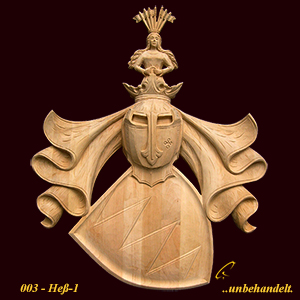
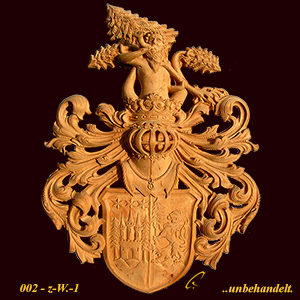
Then comes the wood carving. Every element of the coat of arms—no matter how detailed—is carved by hand, using chisels, gouges, and carving knives. This is not machine work. It is true craftsmanship, requiring experience, artistic skill, and patience. Clients searching for "hand-carved heraldic coats of arms" or those wanting to commission a coat of arms will appreciate the authenticity of this artisanal process.
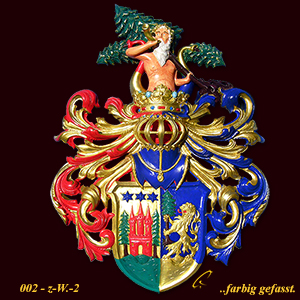
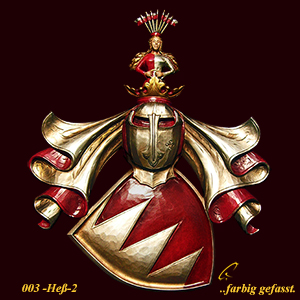
Following the carving, the crest can be left natural (unpainted), or painted using traditional heraldic colors. Clients can also choose to have their coat of arms gilded with genuine gold leaf or silver leaf, giving it an impressive and historically accurate finish.
Types of Hand-Carved Heraldic Crests
-
Personal coats of arms – carved and painted (personal family crests)
-
Large and small fraternity, student corps, and club crests
-
City and municipal coats of arms
-
Company and association logos – carved entirely by hand
-
Farmhouse plaques, guild symbols, family emblems
Whether it’s a small commemorative crest or a large wall plaque for an association hall, each piece is handcrafted as a unique, meaningful artwork.
Questions and Answers
-
Who creates my coat of arms? – Master sculptor Manfred Gerlach, a specialist in heraldry and historical carving traditions.
-
Can I get a coat of arms carved from my own family design? – Yes, even hand-drawn sketches, photographs, or ideas can be turned into a heraldic carving.
-
What does it cost to have a coat of arms made? – Prices vary depending on size, detail, and whether it is painted or gilded. You’ll find price examples on the website or upon inquiry.
-
So how is a coat of arms carving made? – From the initial design sketch to the finished gilded or painted crest, it’s all done by hand in the workshop.
Tradition Meets Today’s Search Trends
People searching for "hand-carved family crests", "custom coat of arms sculpture", or "gilded heraldic emblems" often find inspiration in historical examples—and in the craftsmanship of sculptors like Manfred Gerlach. The art of heraldic carving continues to thrive as a vibrant link between history, identity, and art.
This tradition, passed down through generations, still carries deep meaning. Each heraldic emblem is not just a decorative object, but a symbol of legacy—a unique handcrafted heirloom that connects families across generations.
Let your family history come to life—with a hand-carved coat of arms, painted and gilded in the ancient heraldic tradition.


 ... next page » ....